Define the
Requirement
1
We review the part, the device, and the environment it lives in: what it seals, what it touches, how it flexes, how it is sterilized, and how long it has to hold.
For device engineers choosing, or questioning, the elastomer inside a critical-to-function part.
The material is the one decision on a molded part you cannot change later without requalifying it. So we get it right before the part is validated: the best established grade when one fits, and a compound built to your part's physical properties when none does.
An off-the-shelf grade comes close. It is not quite right on hardness, rebound, sealing force, tear strength, or conductivity, so the geometry quietly absorbs the difference.
A wall thickens. A tolerance loosens. A feature gets simplified. Nobody calls it a material problem, because on the drawing it does not look like one.
A seal that looked fine on paper takes a set. A valve opens at the wrong pressure. A diaphragm that needed to flex drifts instead.
By then the material is locked into the validation plan, and changing it means requalifying the part. On a program heading toward submission, nobody has time for that.
A molder tied to one material supplier recommends that supplier. A molder that only molds what is on the print ends the conversation at “that is what the grade does.” Either way, when the material falls short, your team is left to chase a new grade, a new sample run, and a new validation cycle alone.
A molder locked to one supplier recommends that supplier. A molder that works across all of them, and compounds to spec, recommends the part.
Every quality part requires four things: a machine, a mold, a material, and a process. Material comes first in practice, because the other three are built around it. And because we develop the compound alongside the mold and the process, it is designed to run in production, not just to pass a data sheet.
Most programs do not need a custom compound.
We will tell you when yours does.
Knowing when not to develop a compound is as much a part of the service as developing one.
Supplier-agnostic and spec-driven. Your requirement picks the material, not our supply agreement.
| Material | When it is chosen |
|---|---|
| Liquid silicone rubber (LSR) | Biocompatible, thermally stable, precise. The default for high-volume medical molding. |
| HCR gum silicone | Properties, sizes, and durometers outside LSR's window. |
| Fluorosilicone | Silicone performance plus resistance to fuels, oils, solvents, and aggressive chemistry. |
| Conductive silicone | Electrical function for shielding, contact, grounding, and sensing. |
| Organic and synthetic rubber | When the application calls for a non-silicone elastomer. |
| Custom formulations | When no catalog material meets the requirement. |
We review the part, the device, and the environment it lives in: what it seals, what it touches, how it flexes, how it is sterilized, and how long it has to hold.
If an established grade fits, we recommend it and tell you why. If it does not, we develop a compound that targets the properties you need.
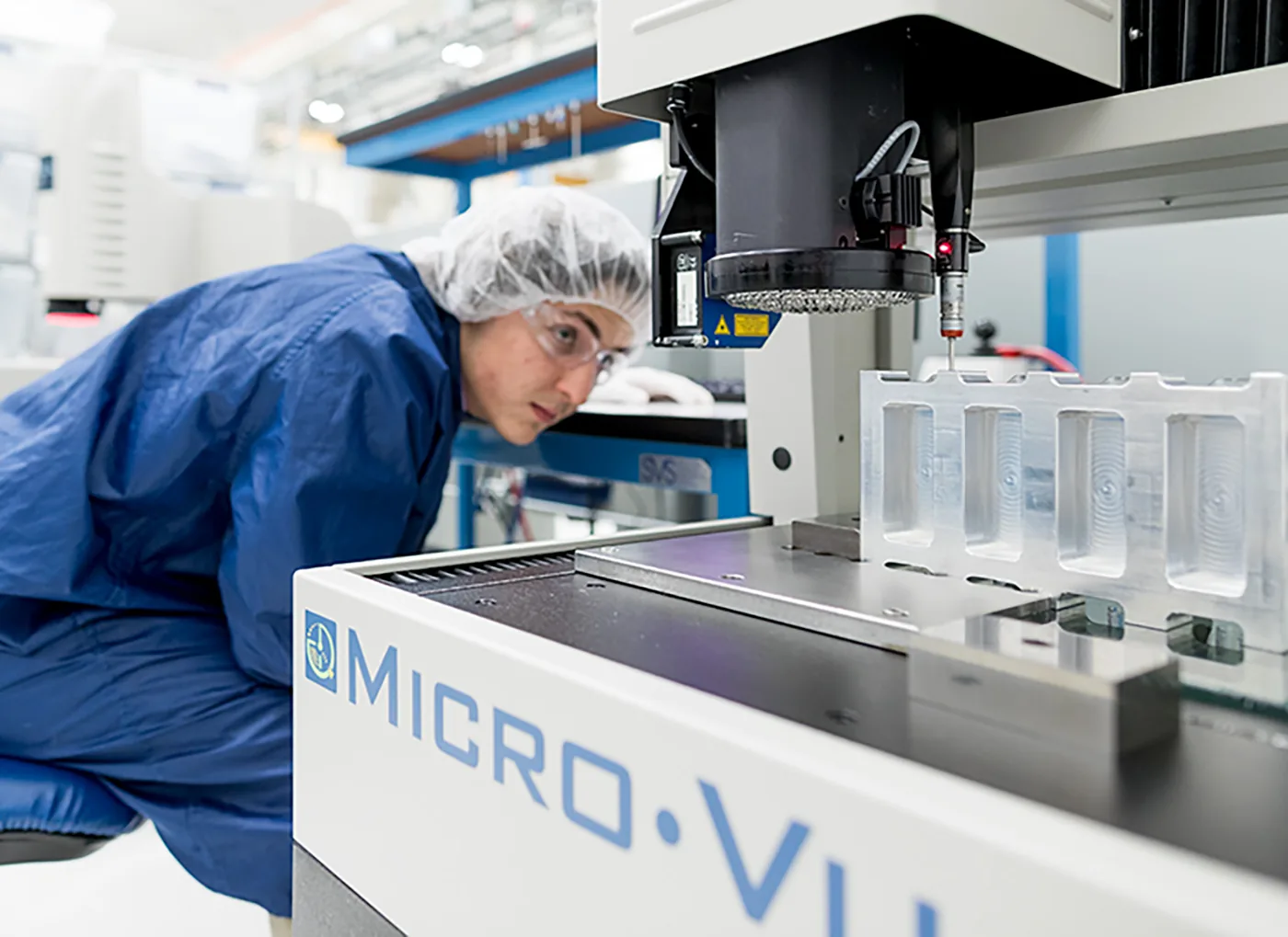
The material is validated in a real mold under real process conditions, so the results reflect production, not a lab slab.
Once it performs, the material is documented and controlled under our ISO 13485:2016 quality system with full traceability, so the part you validate is the part you keep receiving for the life of the device.
Material, mold, and process are developed together instead of handed across three companies and three quality systems.
Material performance is proven in the press before validation, not discovered during it.
A compound developed for your part is documented, controlled, and traceable lot to lot, built to stay consistent from first article to full commercial scale.
The expensive version of this problem is a material swap after submission. Choosing on evidence at the start is how you avoid requalifying later.
Not on the data sheet. In the lot, under test, before it ships.
The same material, controlled across the whole curve.
Inflation, leak, rebound, and response testing, matched to what the part must do.
On every lot, from raw material to shipped part.
Certificate scope: “Custom Critical-To-Function Engineered Components.”
Molding elastomers.
When programs require it.
Tell us what it has to do. Our engineers will find the material that gets it there, or build it. And if an established grade will do the job, we will tell you that too.
From clinical builds to commercial scale, engage our engineers at the print.
Start Your ProgramRevalidation is a given. We plan it around your inventory bank, so your line keeps running while we qualify.
Transfer Your Program